Montblanc pen: 6 points to verify its authenticity
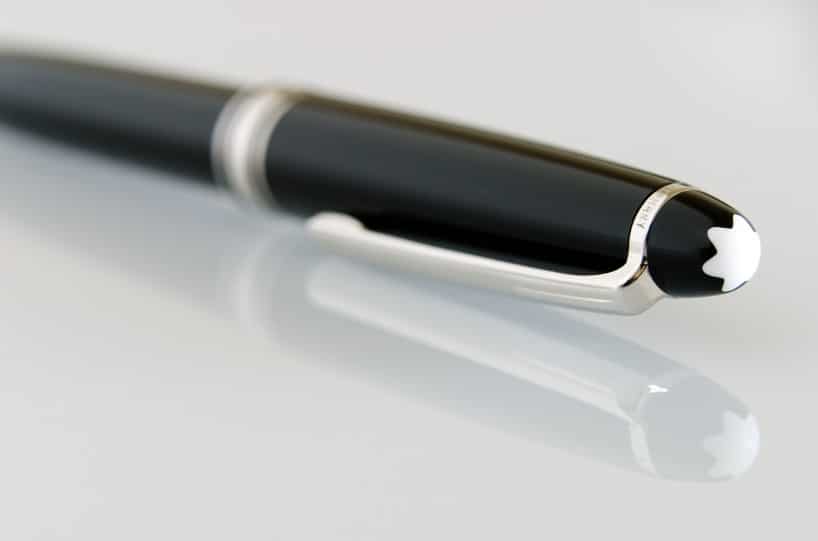
Founded in Hamburg in 1906, Montblanc initially developed around the manufacture of writing instruments before becoming one of the leading names in luxury. Its famous Meisterstück pen, launched in 1924, notably contributed to making the Montblanc pen an iconic object, recognizable by its design, its finishes and its characteristic white star.
Over the decades, Montblanc pens have become much more than simple writing instruments. Some models are now sought after by collectors and are particularly prevalent on the secondhand market. This popularity, however, comes with the risk of encountering counterfeit pens. Between the various collections, limited editions, and manufacturing advancements, it can be difficult to distinguish a genuine Montblanc pen from a fake. So, here's how. 6 points to check before considering a Montblanc pen to be authentic.
1. Is the white star correctly drawn?
The six-pointed white star is one of the iconic elements of a Montblanc pen. It appears notably at the top of the cap on many models and refers to the six snow-covered glaciers of Mont Blanc.
On a genuine Montblanc pen, this emblem must be executed with particular care. Its centering, symmetry, contours, and integration into the cap should be carefully examined. A misaligned or irregular star, one with traces of glue, or one that appears to have been simply applied, can be a red flag. If in doubt, Request an expert appraisal of your item.
2. What does the serial number of Montblanc pens reveal?
The serial number is often one of the first things people look for to verify the authenticity of a Montblanc pen. Newer pens may have a unique number engraved or embossed on the clip.
However, the absence of a serial number does not automatically mean that a Montblanc pen is a counterfeit. Some vintage pens may not have one, and the placement of the serial number can also vary between models. Similarly, the presence of a number alone is not proof of authenticity: counterfeits can reproduce this type of detail.
3. Are the engravings sufficiently precise?
Engravings are another essential element to examine on a Montblanc pen. The brand name, the inscriptions on the rings, the serial number, and other model-specific markings should be carefully studied. On an authentic Montblanc pen, the engravings are generally clear, consistent, and correctly positioned. Poor typography, engraving that is too deep or uneven, misalignment, or letters with inconsistent shapes should raise red flags.
Some collections also feature specific inscriptions. The inscription "PIX," for example, is associated with certain Montblanc writing instruments, but its presence or placement depends on the model and its period of manufacture. Therefore, this detail should not be used in isolation to authenticate a pen.
4. Are the materials and finishes consistent?
A Montblanc pen is also distinguished by the quality of its materials and construction. The company notably uses precious resin for some of its pens, as well as various precious metals or finishes depending on the collection.
Carefully examine the body of the Montblanc pen, the rings, the clip, the cap, and the joining areas. The various components should fit together properly and have a uniform finish. You can also use a transluminescence test of the resin, which reveals a reddish tint when a light is shone behind the cap.
5. Does the feather match the model?
In the case of a fountain pen, examining the nib can provide a great deal of information. Montblanc specifies that its nibs are handcrafted and polished, and that some are made of 14- or 18-karat gold with a rhodium inlay. On a Montblanc Meisterstück pen, certain inscriptions are characteristic, such as "4810". It is nevertheless essential to verify that the engravings, the shape of the nib, and the materials correspond precisely to the model being examined.
The most sophisticated counterfeits can reproduce inscriptions very similar to those on genuine models. To eliminate any doubt about these subtle details, we invite you to have a part verified by our authentication service.
6. Are the model and its characteristics consistent?
A Montblanc pen should be studied according to its exact model. The Meisterstück, StarWalker, Bohème, Heritage collections, or even certain limited editions, do not necessarily have the same characteristics.
Before concluding, it is therefore useful to precisely identify the model reference and, if possible, its production period. This step helps avoid a common mistake: considering as abnormal a detail that is actually specific to an older version or a particular collection.
How to confirm the authenticity of a Montblanc pen?
Even after checking all these elements, determining with certainty whether a Montblanc pen is authentic can remain difficult. The most sophisticated counterfeits sometimes reproduce the appearance of the original models very faithfully. To obtain a reliable answer, the ideal approach is therefore to Have your Montblanc pen examined by a professional specializing in the authentication of this type of item. Cross-analysis of different information allows us to go beyond a simple visual verification.
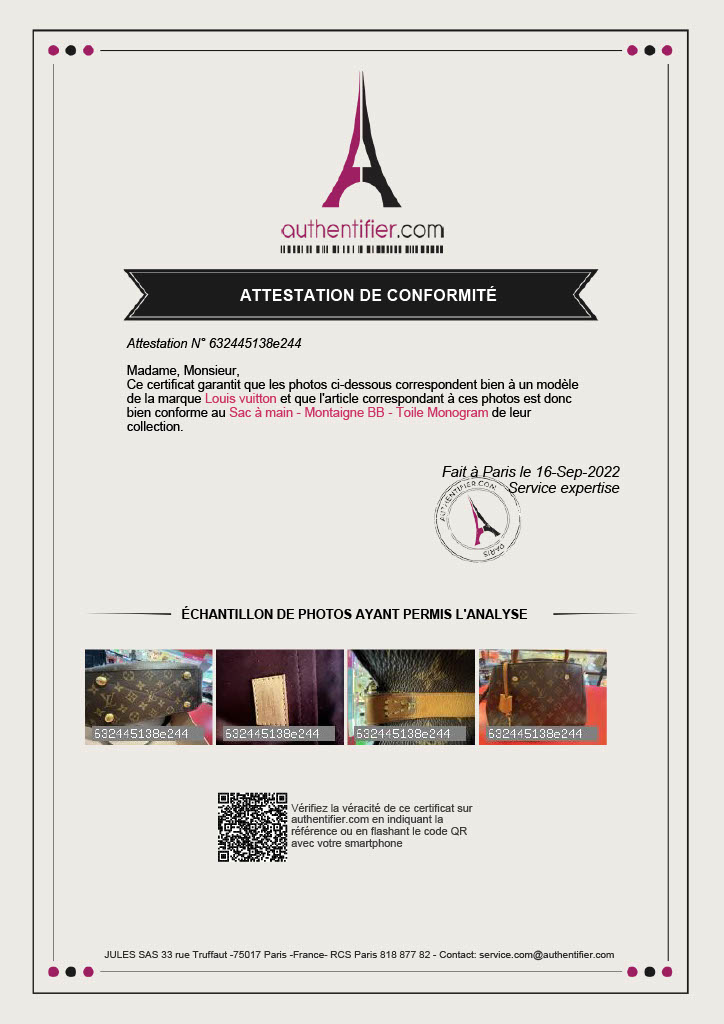
If your pen meets Montblanc's compliance criteria, a Attestation of Conformity will be issued to you. Otherwise, you will receive a certificate of non-conformity allowing you to assert your rights.